Every crackis telling yousomething.
Spalling, carbonation, alkali-silica reaction — diagnosed in parking decks, bridge abutments, and post-tensioned slabs before they become six-figure failures.
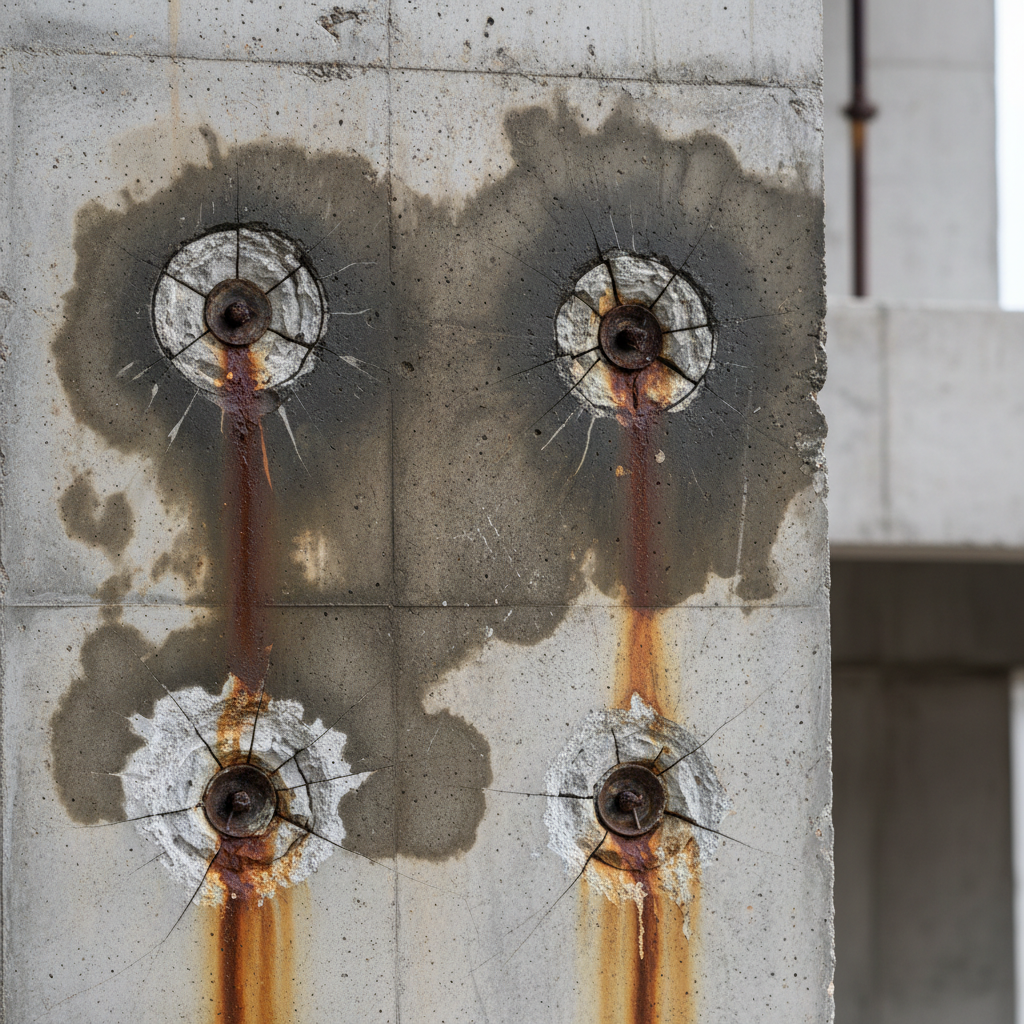
Spalling & Delamination
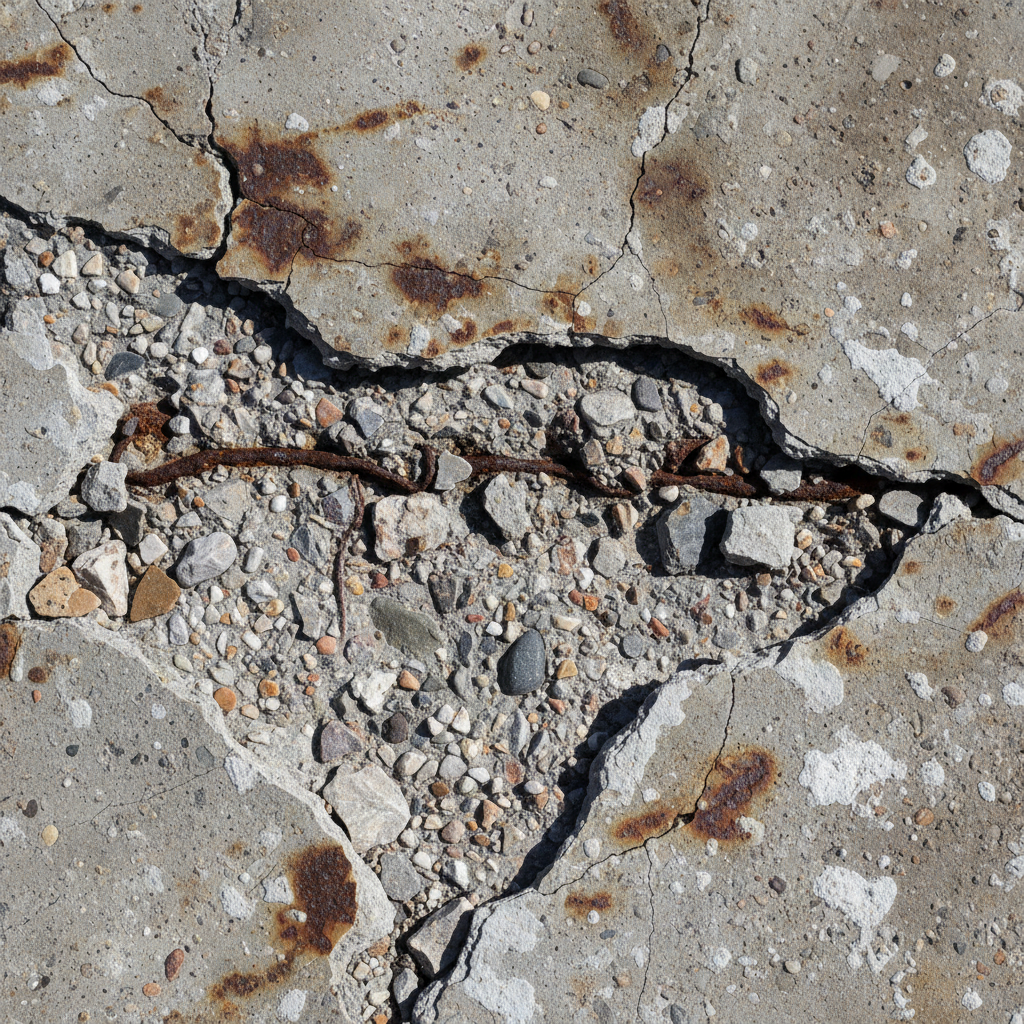
Surface concrete breaks away in flakes or sheets. Appears cosmetic at first — a maintenance crew patches it, the patch fails, the cycle repeats. What's actually happening is that freeze-thaw cycling or corrosion pressure has fractured the bond between the cover concrete and the substrate.
Cover Depth Mapping & Repair Specification
Half-cell potential mapping locates active corrosion cells before visual symptoms appear. Covermeter survey quantifies the extent. A proper repair specification — not a patch schedule — addresses the root cause.
- Half-cell potential survey to map active corrosion zones
- Covermeter scan to verify cover depth against design
- Chloride profile testing at 3 depths per ASTM C1152
- Repair specification with material selection and surface prep requirements
Carbonation & Chloride Penetration
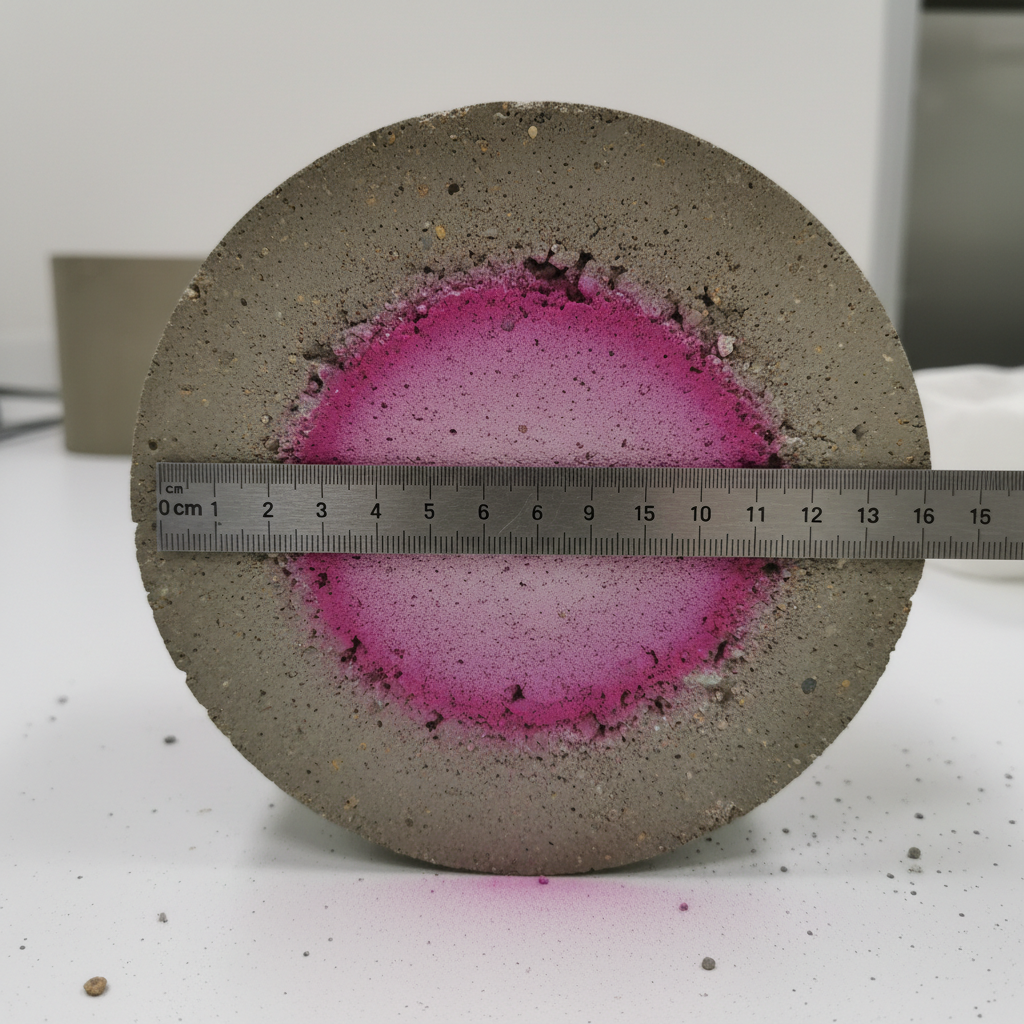
Carbonation neutralizes the alkaline environment that passivates rebar. When the carbonation front reaches the steel, corrosion initiates without any external chloride source. In parking structures, road salt accelerates chloride penetration simultaneously — a compound attack most inspections miss.
Petrographic Analysis & Carbonation Profiling
A 50mm core tells you everything the surface doesn't. Thin-section petrography under polarized light reveals carbonation depth, pore structure, paste quality, and aggregate reactivity — the complete chemical biography of your concrete.
- Phenolphthalein carbonation depth measurement per BS EN 14630
- Chloride profile analysis at 10mm depth intervals
- Thin-section petrographic examination under polarized light
- Remaining service life estimation with intervention thresholds
Alkali-Silica Reaction
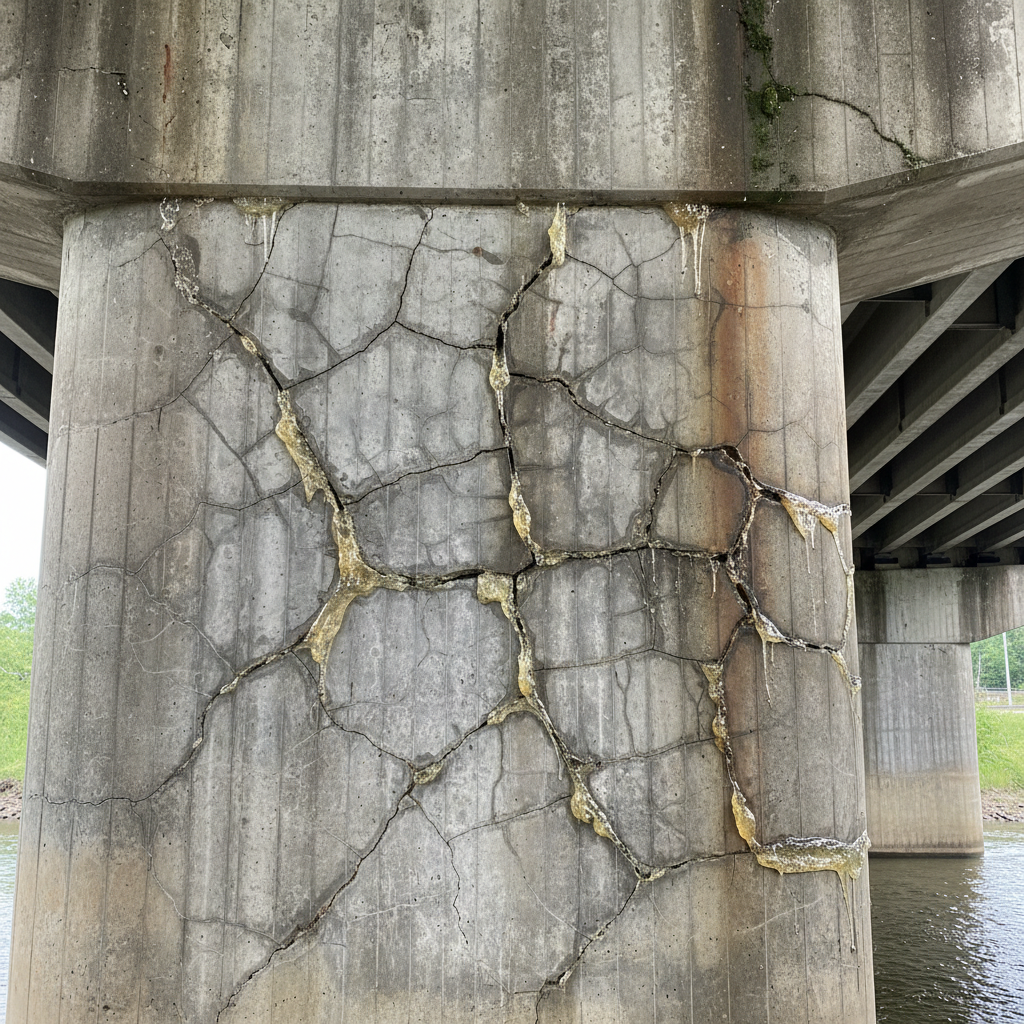
ASR is the slow-motion catastrophe. Reactive silica in aggregate reacts with alkalis in cement paste to form an expansive gel. Over years, the internal pressure exceeds concrete tensile strength — map cracking appears, cracks widen, structural elements lose stiffness. By the time you see it clearly, the damage is already deep.
Petrographic Confirmation & Expansion Monitoring
ASR cannot be reversed, but its progression can be managed. Definitive diagnosis requires petrographic thin-section examination — not just visual inspection. Once confirmed, a monitoring program tracks expansion rate and informs the structural engineer's load capacity assessment.
- Petrographic thin-section examination per ASTM C856
- Uranyl acetate fluorescence test for gel identification
- Stainless steel pin installation for expansion monitoring
- Structural assessment in collaboration with engineer-of-record
What happens
when you wait.
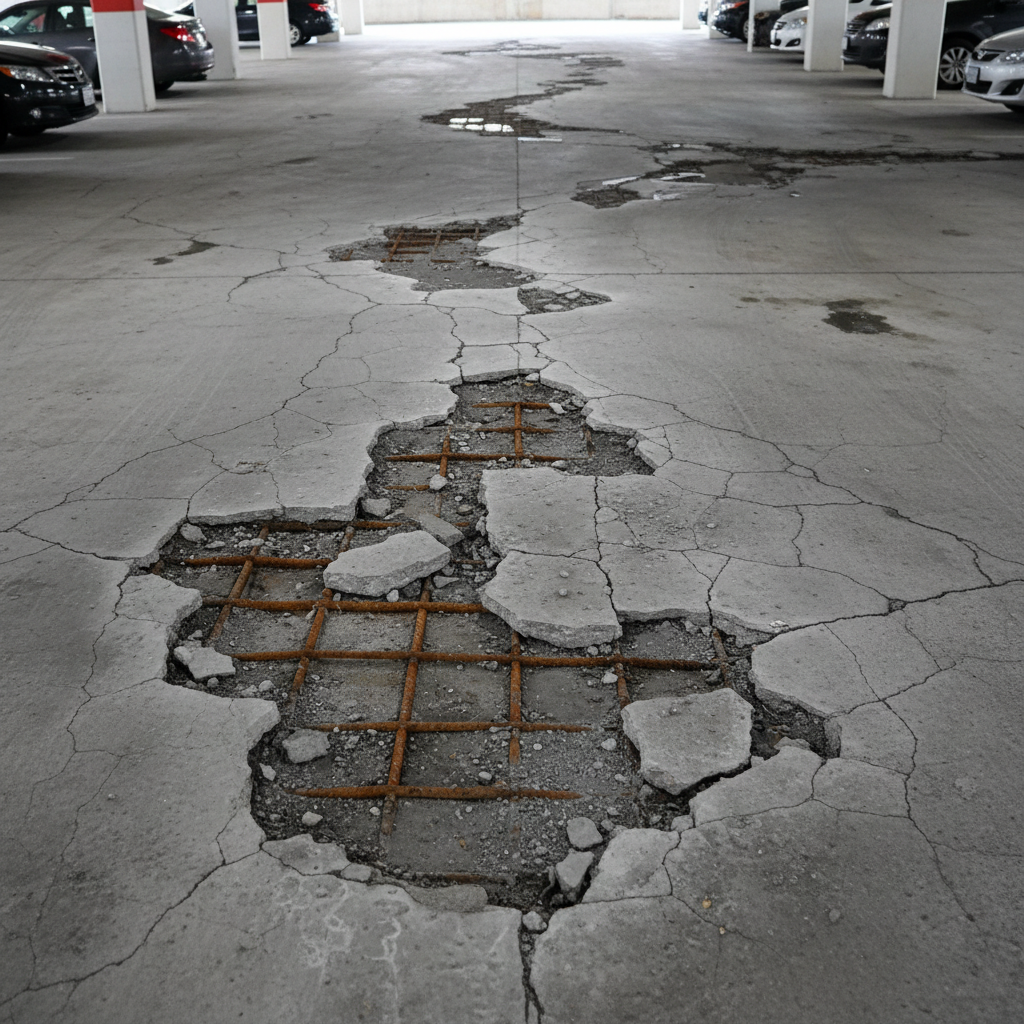
Multi-Level Parking Structure
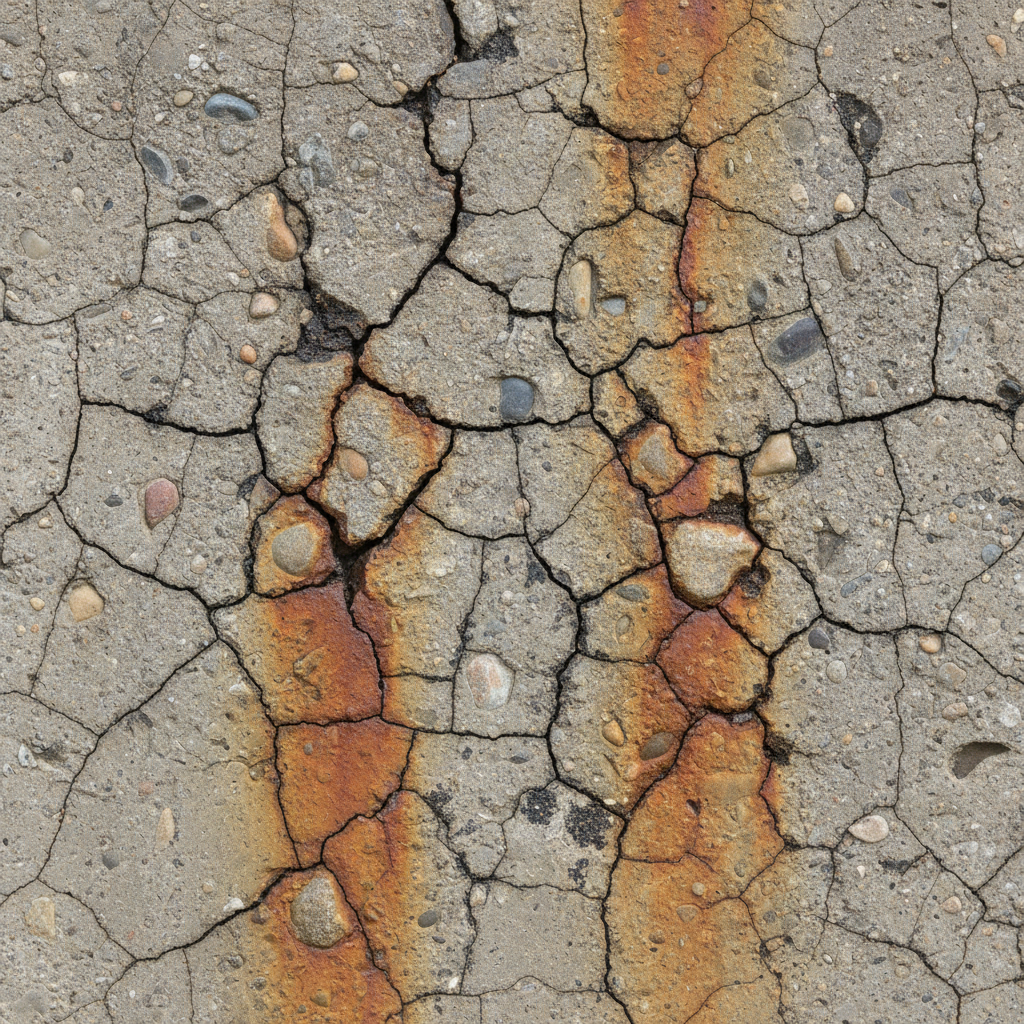
Bridge Abutment